


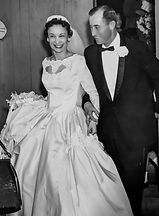
Irene Vincie Fuchtman
Born April 18, 1927
Death September 22, 2025
Married January 28, 1961
Joseph Gilbert Fuchtman
Born July 16, 1927
Death on November 17, 2021
Children:
Kathleen Gerette Fuchtman Becker 10-26-1963
Married 09-01-1984 Timothy L Becker 10-4-1962
James Michael Fuchtman 1-28-1965
Married 9-22-1990 Jody Gudenschwager 6-4-1965
Larry Gerard Fuchtman 9-12-1968
Married 8-4-2007 Katie Marie Pogue 12-28-1981
Joseph Bernard Fuchtman 11-7-1966
Kathleen Children:
Courtney Jo Hanefeldt 9-22-1989
Married 09-22-2012 Garrett Reed Hanefeldt 05-30-1990
Brennan Timothy Becker 3-8-1993
Married 10-10-2015 Katelyn Marie Matthes 12-28-1993
James Children:
Alex Fuchtman 4-25-1994
Married 8-16-2014 Jordan Taralson 11-24-1993
Sloan Schultz 1-11-2001
Married 11-6-2021 Joe Schulz 10-9-1995

Joseph Gilbert Fuchtman
Son of Joseph and Clara (Schula) Fuchtman, was born July 16, 1927, at the family farm southeast of Creighton, Nebraska. He was educated at St. Ludger Academy in Creighton, graduating from there in May 1945 just as World War II ended on the European Front.
His high school years were spent working on the family and neighborhood farms with his brother Willard "Slim", as the war emptied the countryside from the labor source of young men, including four of his brothers, Lenny, Wally, Ed, and Ray.
Joseph worked for the meat packing plants in Omaha during the winter months, eventually taking over the farming operation. He became sole operator in 1956 living on the farm with his father, and eventually purchasing it in the 1960's. On January 28, 1961, Joseph married Irene Kaminski at St Bonaventure Catholic Church in Columbus, Nebraska. To this union four children were born: Kathy, Jim, Joe, and Larry.
Joe enjoyed farming and feeding cattle, selling them at the Creighton Livestock Market and the Sioux City Stockyards. He took pride in maintaining the farm buildings painting the large two-story farmhouse and beautiful red barn by himself every few years. He and Irene moved into town in 1993 when his son Jim and wife Jody moved to the farm, although he continued in the farming and cattle operation for many years after. He took pleasure in the fact they purchased and took over the farming operation. He and Jim's family received the Aksarben's 100-year Pioneer Family Farm award at the 2017 Knox County Fair. The most important crop being the 18 children of three generations raised on the farm.
Joseph was a regular blood donor giving his much-needed blood type of O negative. At age 81 he received recognition for donating 100 units. He was often called to the hospital during an emergency, including donating to a young widow and mother of five after a car accident.
Joseph was a faithful member of St. Ludger Catholic Church, Knights of Columbus, served on St. Ludger School Board, and on the Farmers Co-op Board of Directors for 13 years, including president for several years.
He always said, "you can't keep a good man down." He proved this by recovering from two broken hips and three surgeries the last five years. His determination allowed him to move home in November of 2020 after living at Assisted Living at Alpine Village in Verdigre for two years. The good man they couldn't keep down was able to spend the last year of his life at home.
Joseph passed away November 17, 2021, at the age of 94 years and four months.
His parents Joseph and Clara preceded him in death. He was the last surviving of their 12 children and was preceded by six brothers, Leonard, infant brother Joseph, Walter, Willard "Slim", Edwin, and Ray; and five sisters, Sr. Frances, Edna Burns, Florence Hasenpflug, Sr. Kathleen, and Margaret Focht.
FUCHTMAN family Farm History
Joseph (Joe) G Fuchtman was born on July 16, 1927, on the family farm southeast of Creighton in Knox County Nebraska. His parents (Joseph and Clara) purchased and moved to the farm from Cuming
County Nebraska in 1917. He was the 9 th of their 12 children, and the youngest of the seven boys (he had an older brother also named Joseph, that died in his first year before Joe was born).
He was educated at St. Ludger’s Academy in Creighton, graduating in May of 1945, just as World War II ended on the European Front. His high school years were spent working the family farm and neighborhood farms with his brother Willard (Slim), as the war emptied the countryside from the labor source of young men, including his four brothers Lenny, Wally, Ed and Ray. After graduation he
continued working on the farm with his brother and Father. Some winters in the 1950s were spent boarding in Omaha and working at the meat packing plants as the wages were good for that time. He
also worked for a time on the Lindhorst farm east of Creighton, near the Wausa area, boarding there during the week. He would hitch a ride on Creighton’s east school bus route on Monday mornings and
return home on Saturday evenings.
He met Irene Kaminski at Kings Ballroom in Norfolk Nebraska in 1960. Irene was a nurse working in Columbus and would travel to the Saturday night dances with her friend and fellow nurse (Rosie Wagner
from Creighton). Joe and Irene married at St. Bonaventure’s in Columbus on January 28, 1961. They began their married life on the farm renting the 160 acres from his father. He also rented the adjacent
160 acres to the east that had been rented by the family for many years. In addition, he purchased 120 acres of pasture with his brother Willard east of the place. His brother Slim’s farm was only 2 miles
away to the northeast and Wally’s farm two miles to the south. The three brothers worked together with haying, harvest and working cattle.
They purchased the farm from his father in 1966. He also began renting the 40 acres of crop ground on the Rhem farm that adjoined the farm to the northwest. The farming operation now consisted of 420 acres of which approximately 180 acres were pasture and hay meadows. He had a 25 head Hereford cow/calf operation with the calves raised till they were fattened for selling for slaughter and had a
farrow to finish hog operation of which he farrowed twice a year raising around 400 hogs per year. The cropland was corn (grain and silage), oats, and alfalfa of all which was fed to the livestock (there were no cash crops at that time). The dairy operation went down to one cow. Eggs were sold to the Creamery in Creighton until it’s closing in the early 1970s. At that time the layers hens were reduced to around 25 for family use with only a few dozen extras sold. 75 broilers were raised and butchered for family use each summer. Sweet corn, tomatoes, potatoes, and cucumbers were raised in the garden every
summer (along with a pumpkin and watermelon patch out in the field).
The drought of ’68 required the cows to be sold because of lack of feed and the beef operation switched to weaned calves bought off the cow and grown on grass in the summer and finished on grain (approximately 50 head of steers and 25 heifers). In the late 1970s soybeans began to be raised and were the first cash crop for the Fuchtman Family farm. In fall of 1975 the machine shed was added. A severe blizzard paralyzed the county in November of that year. The snowdrifts went as high as the new machine shed and the boys played football with their friends on top of the roof that winter.
All the hay was still stacked, the corn and soybeans cultivated twice, the soybeans had to be walked for weeding of cockleburs and sunflowers and volunteer corn as there as not any sprays for beans in those days (no round-up-ready, or genetically modified crops in those days). Straw was the bedding used for the hog and dairy operations that were numerous across the County. Corn was picked in the ear and
stored in cribs to dry and later shelled with a corn sheller.
In the summer of 1979, the last train went to Creighton. Since 1883 (nearly 100 years) the trains rattled west of the farm, less than a quarter of a mile away, on the Norfolk, Nebraska to Winner, South Dakota
line. It had been a part of the Fuchtman’s lives for over 60 years and during its prime was a ritual morning and evening event (traveling north in the morning and south in the afternoon). It was the prime pheasant habitat and hunting as the large right of way was abundant in native grasses and plum thickets. It was a sad day for the farm but a sign of the times as the roads were improved and truck traffic had taken over. The railroad right of away on the neighboring farms (including the rented Rhem Farm) was converted to cropland or pasture.
Fond memories of the children growing up were the summer visits of the Kaminski and Ragatz cousins. At times the farm was full of 22 kids running around, with 30 people with the four sets of parents,
packed into farm house at night. The numerous visits with the Van Brocklins (the kick-the-can games, the Grove Lake and Merriman Run picnics, and the winter sleigh riding at the Van Brocklin Ranch). The
4 th of July gatherings with the Pasels and the Wagners and the Thanksgiving gatherings with the Jerry Kaminskis. Riding bikes to town for summer baseball and softball or the swimming pool. 4-H and the
County fair with the showing of the horses and hogs.
Farm) was converted to cropland or pasture.
Joe was an active member of St. Ludger’s Catholic Church and their chapter of the Knights of Columbus, a regular high demand O negative blood donor, and served on St. Ludger School board, and was active
and served as President on the local Farmers’ Union board.
Joe and Irene bought a house and moved into Creighton in 1993 as their oldest son Jim and his wife Jody began taking over the farming operation. Even though retired to town he continued working with the
farming and cattle operation until 2016, at the age of 89, a broken hip forced him to give it up. In the fall of 2018 Irene moved into the Alpine Village nursing home in Verdigre Nebraska and Joe moved into
assisted living also at Alpine. He was determined to move back to his house in Creighton and did so in 2020 and spent the last year of his life there, passing away on November 17, 2021.

Irene V. (Kaminski) Fuchtman
Daughter of Victor and Domicella (Krzycki) Kaminski, was born April 18, 1926, in Omaha, Nebraska. Irene lived in Elba, Nebraska most of her childhood years. The Elba area provided a close-knit community since it was an area where Polish immigrant family settlements were numerous.
A host of great-grandparents, grandparents, aunts, uncles, and cousins were a large part of Irene's young life. At age 16, she moved with her family to Grand Island when her father was transferred for his railroad job. Irene graduated from Grand Island Central Catholic High School.
After graduation, Irene worked in Grand Island for a year and then was accepted into St. Catherine's School of Nursing in Omaha.
Upon receiving her nursing diploma and passing state boards, Irene worked in Omaha, Lincoln, Long Beach, California, and then in Columbus, Nebraska, where she was living while caring for her ailing father.
When Irene married Joe in 1961, she moved to Creighton to work at Lundberg Memorial Hospital. She took a break from nursing as the children entered upper grade school and junior high. As the kids left home, Irene returned to the nursing profession for a few years.
Irene was united in marriage to Joseph Fuchtman on January 28, 1961, in Columbus at St. Bonaventure Catholic Church. They met through a mutual friend at King's Ballroom in Norfolk. Joe and Irene enjoyed dancing at wedding receptions and town celebrations much of their married life. They were married for 60 years at the time of Joe's passing in 2021.
Joe and Irene lived on the family farm from 1962 to 1993. Irene grew up as a "town girl" and had to adapt to farm life when she married Joe at the age of 34. There was the big white farmhouse to care for that that Joe grew up in southeast of Creighton. There were cattle, pigs, crops, chickens, and a garden to raise as well as working shifts at the hospital. Two and half years later, their farm household grew with four children born in a five-year time span, adding Kathy, Jim, Joey, and Larry to the family.
Joe and Irene's children were the third generation to live in the Fuchtman household. The cousins, especially the "city cousins" loved coming to the farm to gather eggs, ride the horse or pony, and go for tractor and wagon rides. One July 4th in the 1970's, all the Kaminski aunts, uncles, and cousins gathered at the family farm. Fond memories are often shared about 22 cousins and eight adults that spent the night at the farm. Kids could be found on the second-floor porch outside, all over the living room floor and scattered throughout the lawn. The adults got every available bed in the house. Thankfully there was still an outhouse in the trees at the time.
Irene was a faithful member of St. Ludger Catholic Church in Creighton and St. Ludger Council of Catholic Women. Irene was also a member of the extension club and served as hospital auxiliary president for two years. She often spoke of the importance of praying to Mary our Mother for special intentions and intercessions. She spoke of the importance of praying the rosary and certainly turned to Mary for guidance and help when the four children entered their teen years.
Irene entered Alpine Village nursing home in November 2018. Over nearly seven years, the staff developed a fondness for Irene, nicknaming her "Vincie", her middle name. Irene had a purpose during those years, brightening a day with her cute comments and unexpected, spontaneous laughter. She remained at Alpine until her passing on September 22, 2025.
Irene is survived by her four children, Kathy (Tim) Becker of Creighton, Jim (Jody) Fuchtman of Creighton, Joe Fuchtman of Arlington, VA, and Larry (Katie) of Gilbert, AZ; nine grandchildren, Courtney (Garrett ) Hanefeldt, Brennan (Katelyn) Becker, Clarissa Becker, Alex (Jordan) Taralson, Ian Fuchtman, Sloane (Joe) Schulz, Bailey Fuchtman, Emmett Fuchtman, and Abigail Irene Fuchtman; 10 (soon to be 11) great-grandchildren; brother, Stanley Kaminski of Dayton, OH; and sister-in-law, Theresa Fuchtman of Omaha, Nebraska.
She was preceded in death by her husband, Joe; brother, Jerry; sister, Liz; nephews, Robb Kaminski, Ed Burns, Bob Burns, and Tom Fuchtman; nieces, Sue Mathine and Ann Beth Focht; and numerous brothers-in-law and sisters-in-law.
A photograph of Mr. and Mrs. John Krzycki

1810 — Probably the earliest times that hunters and immigrants crossed the plains that are now known as Nebraska and specifically Platte County.
1856 — Settlers first congregated and organized Platte County and christened the town Columbus.
1862 — First homestead in the United States took place near Beatrice, Nebraska.
1864 — Looking Glass Massacre, Genoa, Nebraska — probably the last Indian scare in Nebraska.
1865 — Columbus, Nebraska incorporated.
1871 — John Krzycki set out for Nebraska – marries Barbara Borowiak.
1875 — Grasshopper plague, two weeks in June, came in swarms forming clouds so thick that the light of the sun was darkened.
1877 — Earthquake in Columbus, Nebraska and Platte County, lasted one-half minute.
THE POLISH IMMIGRATION- SINCE SPRING, 1808
Attracted by the prospect of cheap homesteads in Nebraska, the Polish settlers began to come by way of Omaha into" Platte County. The first appearance of these people was in March or April of 1868. The first Polish families to come to the Duncan neighborhood, as far as we can ascertain, were: Walenty Jarecki, Joseph and John Rosno, Lawrence Kujawa and Anton Nicolajczek, probably in 1868. Some or all of these seem to have tarried at Chatsworth, Il- linois. Then came Mike Lassek, probably in 1869, and, in 1871, appeared John Krzycki and Mar- tin Borowiak, both from Posen, Prussia. Joseph Borowiak (married) and Frank Wozniak (sin- gle); the latter came in 1872 or 1873 and settled across the river in Polk county.
PIONEER HARDSHIPS AS RELATED BY MRS. JARECKI
"We were told in Germany that in America one could grow rich, quickly, because land could be obtained gratis. Talking about this, my hus- band and myself, being both young and strong, resolved to try our fortune in the New World. Upon our landing in New York, we were direct- ed to far-off Nebraska. After several days of weary travel, we arrived at Columbus, and were led to a sandy desert, about six miles from Col- umbus. Full of dismay I cried out to my hus- band: The Lord help us!' But necessity knew no law. Here we were and must make the best of it. And we went to work at once. When the men had staked off our land, we were left alone under the open vault of heaven. Our first care was to provide a sleeping place. We dug a hole and covered it up with branches and brushes. Next we put up three poles and hung our pot on it, in order to prepare our meals. As soon as possible, we erected a sod house. It was without windows. We now had to cultivate the soil, my husband plying the spade and I the hoe. In spring we purchased a yoke of oxen and a plow and sowed the newly furrowed ground to grain. Soon after Mr. M. Lassek arrived as our first neighbor. Whenever we wish- ed to sell anything, my husband and the ox team left on Monday morning for Omaha, and re- turned about Saturday. In the mean time I remained all alone with the children. Many a time the Indians paid us a visit."
An amusing story is told of a certain gentle man, who, as his neighbors positively claimed, and which he stoutly denied, that to save money, he was sent by a friend in Chicago to Columbus in a box. The box was addressed to him- self. When the train was moving, the living freight, so humor had it, unhooked his box and got out to stretch his limbs; as soon as the train slowed up, he got back into his box for another siege. Thus, he finally got to his destination. The person involved claimed that this was wrong, as he came to the Duncan. neighborhood in February, and would have frozen to death enroute. Nevertheless, he at first helped the story along by pointing out the box he came in when people asked him about this.
This story is probably exaggerated, but the poverty of the new arrivals, in a great many in- stances, was pitiful, and many had to be given food and money by their country men when they first came to Columbus, looking for employment.
THE JOHN KRZYCKI FAMILY
We have already alluded to John Krzycki. He was born January 21, 1847, in the town of Uscie, in the Prussian province of Posen. After finishing his elementary course, he attended a Teachers' Seminary, corresponding to our Nor- mal School, at Keima and at the age of 21, obtained a teacher's diploma. After that Mr. Krzycki taught three years at the village of Wyszyny.
Hearing a relative, who had returned from the United States, praising that land as the country of opportunity, and possibly more so, because his sweetheart had gone on to the New World some time before and because of rumors of an impending war, John Krzycki made up his mind to leave Europe and seek his fortune in America.
From New York he hastened to his brother in South Bend, Indiana. In July, 1871, he set out for Nebraska to take a homestead here: Stopping at Morrison, Illinois, with former friends of Wyszyny, he was privileged to cast his lot for life with the young lady of his choice, Miss Barbara Borowiak.
The wedding ceremony over, the young couple set out for Nebraska and at Fremont met John's brother, Felix Krzycki, who had come from South Bend by wagon. After looking around for several days for a suitable location, they moved on to Columbus, Nebraska. A lot in the south part of the city had on it an abandoned, for- lorn-looking barn. They used the lumber to put up a two-room hut near the present 7th Street and 23th Avenue
WITHOUT MEANS
In Columbus, the two families were soon joined by other arrivals, among whom were Martin Borowiak, Mrs. John Krzycki's father, and Joseph Krzycki, brother to John and Felix. The entire winter of 1871 was spent in abject poverty in Columbus.
While attending Father Ryan's church to ful- fill their Sunday duty and seeking heavenly aid, they overheard some people conversing in Polish. The group proved to be no other than the Jareckis, Kujawas, Rosnos and Lasseks, mentioned as the first Polish arrivals in Butler township.
Learning of the poverty of the newcomers, these older pioneers provided their countrymen with a sufficient supply of potatoes, the only food they could possibly spare.
As soon as the winter relented, the men scattered over the countryside, working at various farms, in order to support wives and children. John Krzycki first worked for a certain Mr. Brauner, some four miles southwest of Colum- bus. Later on he helped to construct the Union Pacific tracts near Elm Creek.
Meanwhile, his wife had moved to a farm which her father, Martin Borowiak, had rented for her. This was the present Nyffler farm, about four miles southwest of Columbus. Here, in July, 1872, their oldest son, Frank Krzycki, was born.
In the fall of the same year the John Krzycki family took out homestead papers on the so- called "Island", between the north and south channel of the Platte River, about five miles southwest of Duncan.
THINGS GRADUALLY IMPROVED
The beginnings of the farm were exceedingly trying, the father hardly having enough to buy the bare necessities of life. Finally, a two-room house was erected, one of the rooms serving as a granary. When the family increased, a sod house was added for a bed-room; later, a real granary was built.
Krzycki's first cow was donated to the strug- gling family by his father-in-law, Martin Bor- wiak, who was somewhat better fixed. The calf from this cow, on which they had placed much hope, died.
An old wagon and yoke of oxen was purchased on the installment plan. After some years a team of horses was acquired in a similar man- ner. To save wear and tear on the wagon as much as possible, sleds were used even in sum- mer, there being tall grass and lot of sand. and the sled would pull as easily as on the
Many other incidents of pioneer life on the prairie might be told How packs of wolves 81 would rove about the banks of the channel, a few blocks away, yelping and howling, often coming up to the very door of the house to carry off some prey; how the wandering In- dians, who were mostly Pawnee, would appear suddenly as if out of the air, to frighten the children, especially when the father was away. The colder the morning, the earlier their. knock was heard on the door. calling "Ho, Charley! Ho. Charley!" and, always hungry. begging for food.
1885 the island farm was sold for $13.00 per acre, and a farm of 160 acres, on the present Lincoln Highway, about three miles southwest of Columbus, was purchased. Here the family lived until 1918.
Of the many children in the family, John became a Franciscan priest, two daughters, now known as Sister M. Loretto and Sister M. Sera- phia, are Franciscan nuns, some died and the others married, moving to various places. Phillip, the youngest, served in the World War, while Anthony, another son, served as County Treasurer of Platte County for several years.
Mr. and Mrs. John Krzycki had the extreme happiness of celebrating their Golden wedding anniversary at St. Bonaventure's Church, Columbus, Nebraska, on August 1, 1921.
After five years more of wedded life. death came to Mr. Krzycki, on February 1. 1926. It. was caused by a stroke of paralysis. An estate of $50,000 was left by the deceased.
REMINISCENCES OF DUNCAN
(Gathered. by Mike Lassek).
The Krzycki, Borowiak and Wozniak families settled on the Island in Polk county. All of them took homesteads. They had no money and could hardly get any. If it did so happen that they got a little money by selling eggs, butter, etc., to tourists on the trains, this was used to buy cows and other stock.
But after the first year's crop, things looked brighter. The country abounded in fish and game, prairie chicken, quail, duck, geese and deer. The trouble was, however, to get a gun and ammunition.
Then the grasshoppers and drought worked havoc.
At this turn of affairs, the Polish settlers were discouraged and home-sick, and many. no doubt, would have gone back to Illinois or Indiana, or even back to Poland. if they could have gotten rid of their farm lands. Bare nec- essity kept them here.
Gradually, however, they grew more accustomed to the new surroundings and began to like it. Then came the grasshoppers, to take the new courage out of their hearts, for these voracious pests ate off the heads of the wheat,
Rev. John Krzycki was born at Duncan, Platte county. Nebraska, on July 13, 1878. His parents were Mr. and Mrs. John (Barbara Boro-wiak) Krzycki. After living on the farm for a number of years, the family moved to Colum- bus. John, who had attended the district school, for a year, next attended the parochial school. He made his classical studies at Teutopolis, Illinois, and was invested there with the Franciscan habit, July 23, 1898, and was given the name of Wenceslaus. He was ordained priest July 5, 1904, and said his first Mass at Colum- bus. Fr. Wenceslaus was pastor of Immaculate. Conception church at Omaha. April, 1905-May. 1910; labored at Cleveland, first as assistant and from 1912-1918 and again 1919-1924 as rector. During his pastorate he built a fine large school. Fr. Wenceslaus was sent back to Omaha and during his second pastorate erected the magnificent new church.

Fuchtman Photo Gallery
Fuchtman Family Pics
Image or Family Member description. Use this space to write a brief description of this person, or add a short bio.
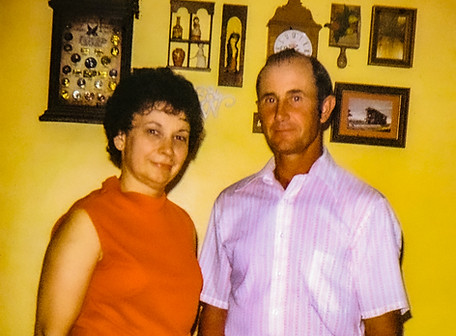
Fuchtman Photo Gallery
Fuchtman Family Pics
Image or Family Member description. Use this space to write a brief description of this person, or add a short bio.
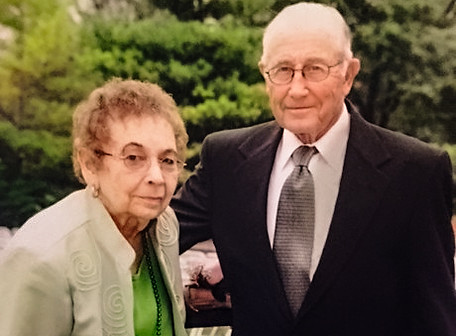
Fuchtman Photo Gallery
Fuchtman Family Pics
Image or Family Member description. Use this space to write a brief description of this person, or add a short bio.
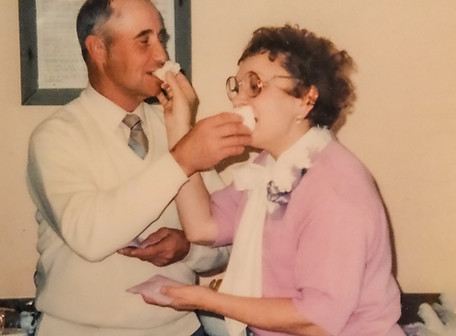
Fuchtman Photo Gallery
Fuchtman Family Pics
Image or Family Member description. Use this space to write a brief description of this person, or add a short bio.

Fuchtman Photo Gallery
Fuchtman Family Pics
Image or Family Member description. Use this space to write a brief description of this person, or add a short bio.

Fuchtman Photo Gallery
Fuchtman Family Pics
Image or Family Member description. Use this space to write a brief description of this person, or add a short bio.

Fuchtman Photo Gallery
Fuchtman Family Pics
Image or Family Member description. Use this space to write a brief description of this person, or add a short bio.

Fuchtman Photo Gallery
Fuchtman Family Pics
Image or Family Member description. Use this space to write a brief description of this person, or add a short bio.

Fuchtman Photo Gallery
Fuchtman Family Pics
Image or Family Member description. Use this space to write a brief description of this person, or add a short bio.
Fuchtman Photo Gallery
Fuchtman Family Pics
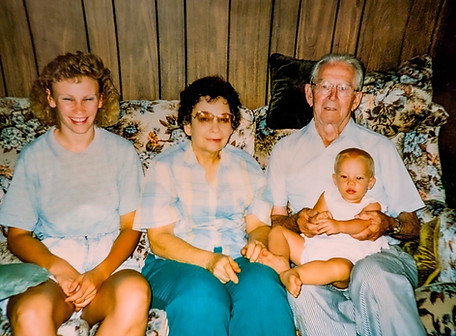
Left to right: Kathy Fuchtman Becker 3rd generation. Mom, 2nd generation (Courtney was their first grandchild) Uncle Leo Kryzcki 1st generation, kind of... since both of mom's parents had already passed away Uncle Leo took on the role of 1st generation. He is holding Courtney Becker who was 1 at the time. She is 36 now. She would be the 4th generation.
Fuchtman Photo Gallery
Fuchtman Family Pics
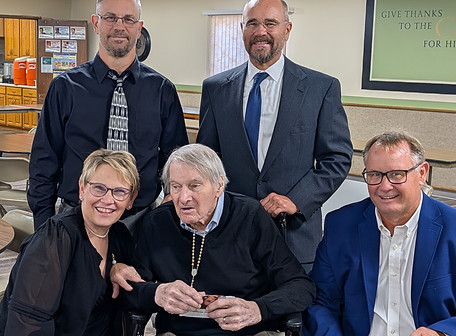
Left to right: Kathy Fuchtman , Stan Kaminski, Jim Fuchtman, Larry Fuchtman & Joey Fuchtman